

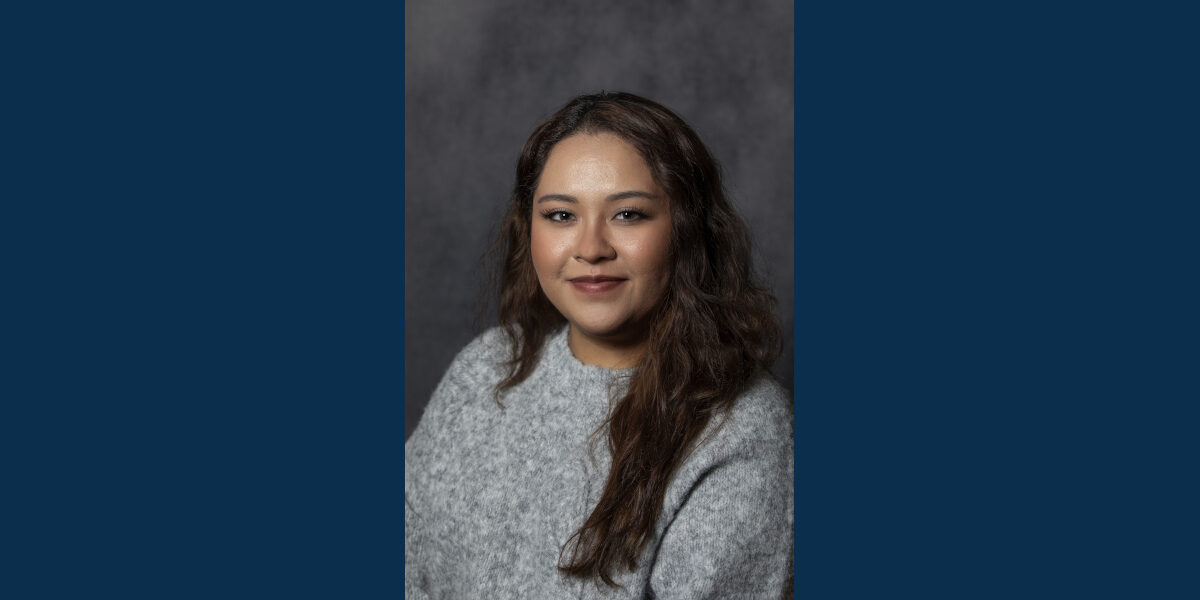
A Conversation with 2026 Mental Health Talent Pipeline Scholar Arley Rodas Lara
4 min read. We're absolutely thrilled that Arley Rodas Lara, coordinator of SRJC's HOPE program, has joined our Mental Health Talent Pipeline program! We spoke to her about the importance of mental health.
Arley Rodas Lara is one of three new Mental Health Talent Pipeline scholarship recipients who begin their studies this month in USF Santa Rosa’s three-year master’s program in counseling psychology.
As a Sonoma County native and first-generation college graduate with a double degree in psychology and Latin American Studies (UC Santa Cruz, 2021), Arley has long been focused on serving especially first-generation students who, like her, did not have the benefit of a family history of higher education and the familiarity and support that can afford.
Indeed, readers of this newsletter will already know Arley as the dedicated Coordinator of Santa Rosa Junior College’s outstanding HOPE (Health Occupation Preparation Education) Program, where she supports the success of underrepresented and first-generation students pursuing careers in healthcare and the health sciences.
“It’s really an inspiration to me to see HOPE students that have such a passion for the fields that they’re going into, for wanting to care for others and help others,” says Arley, who began her own undergraduate studies at SRJC before transferring to UC. “That has fueled the interest I developed at UC Santa Cruz and my wanting now to pursue this further as a professional therapist.”
What brought you to the USF program in counseling psychology in particular?
There’s a lot that goes into why I ultimately decided on the counseling psychology program at USF. I mentioned in our previous conversation that I had earned my bachelor’s degree in psychology and did a lot of work with first-generation students, students who were bicultural and bilingual. That sparked my interest in continuing to work in areas of service where I could offer support to other people, which ultimately led me to the HOPE program. It reignited that passion, helping these students, who I do see myself in a lot of the time. I have to thank HOPE for the opportunity and the experiences that have allowed me to pursue this as my career. I’ve been there for the past three years, and it really has shaped who I am today, along with my background as a daughter of Mexican immigrants.
How does your own background inform your work?
I bring that experience with me. It’s part of understanding the family values and responsibility, as well as the sacrifice that often has been made—including in terms of mental health—in the families and students that I see. I see people continually carrying very difficult things while they show up to school or to work, and while they show up for their families and communities, yet they often don’t have access to, or even information about, mental health support. I want to be a bridge to that support for those people. Right now I do that through referrals and helping as much as I can at a more social level. But I believe the USF program will take me to the next level, so that I will be able to support people even further.
“I didn’t want to go into a program that looked at mental health only from a clinical perspective or was too narrowly focused on the individual exclusive of their environment, because that’s not the reality for a lot of people, including myself.”
Arley Rodas Lara
The importance of the shared experience and background you describe is also recognized by the USF counseling psychology program, isn’t it?
That’s what really drew me to USF, because I saw the kind of professionals who were coming out of that program. It’s hard not to bring up [Healthcare Foundation Board of Directors Vice Chair] Daisy Cardenas in this context, who was my predecessor in the role of HOPE Coordinator and who also went through the USF program. Watching Daisy navigate her career and her role in the community after earning her degree at USF, and having seen how personable she always was with the students at HOPE, was another inspiration to me. Talking with her, hearing about her experience at USF, convinced me that this was the program for me.
I didn’t want to go into a program that looked at mental health only from a clinical perspective or was too narrowly focused on the individual exclusive of their environment, because that’s not the reality for a lot of people, including myself. I wanted a program that really understood how family, culture, individual identity, immigration and economic status, education—the larger systemic context—can impact someone’s mental health. Other programs I researched, and even applied to as a backup to my USF application, didn’t necessarily share that emphasis. Knowing that USF has the emphasis on social justice and culture, on having culturally responsive practices, is what stood out to me. It connects to my personal experience and with much of the work I do with the students I serve.
Also, I myself have gone through therapy. I have experienced working with therapists who don’t have that background or understanding of immigrant families or people who are first-generation, and it’s difficult to feel fully supported and heard. On top of that, it’s hard to really open up, which I feel defeats the purpose of therapy: you have to be honest with your therapist and honest with yourself to be on that path towards healing.
How do you see your connection to northern Sonoma County at this point?
I’ve grown up and spent about 30 years here now. I’ve built my life here with my husband. It’s where I work. I have my community here. It’s the place where I want to continue being for the rest of my life. I really enjoy the community that I’ve found here. In the beginning, it was maybe what you might call of surface-level importance for me—this is where I live, I have friends here. But as I’ve grown and gained experience, with the help of the HOPE program in particular, I’ve become more ingrained in the community. It’s shifted from just living here to feeling a responsibility, feeling invested in the wellbeing of Sonoma County.
I want the work I do here at HOPE, and also eventually as a therapist, to continue to serve the people that live here, and especially the Latine community. I know that there’s a lot of trauma and a lot of healing that needs to be done. Given the political climate of the past couple of years, now more than ever we really need therapists and professionals who understand the lived experiences of the people in Sonoma County, and the very real fear that is coming up for a lot of people. I think that there’s strength in having a good number of therapists that are bilingual and understand these problems and challenges, who understand them professionally and at a deeper level, the level of lived experience. I want to be able to be a source of healing, to be a pillar for people to come to and feel safe with.
Is there anything else you would like to add?
Yes. I am really grateful and beyond excited, still in shock really, that I received this Mental Health Talent Pipeline scholarship. I’m also grateful that there were others who received it who also want to help the community and support those who are definitely in need right now. I don’t know how to express how thankful I am to the Healthcare Foundation, not only for selecting me but for continuing this pipeline for other students. I truly hope the scholarship program grows and more people can be supported through it, because the goal is really important.

Related News + Stories

Invest in Our Community
Your support is vital to our collective vision of eliminating health inequities in northern Sonoma County.
Donate