


Mental Health Talent Pipeline Spotlight: Meet Karina Esquer
3 min read. We're pleased to introduce you to Karina Esquer, one of our newest Mental Health Talent Pipeline scholarship recipients!
When Karina Esquer reflects on the path that led her to USF Santa Rosa and graduate studies in counseling psychology—with support from the Healthcare Foundation’s Mental Health Talent Pipeline scholarship program—she describes a journey marked first by loss, then by unexpected possibility.
A few years ago, Karina learned she was slowly losing her vision. Eventually, she was declared legally blind. “At that time I didn’t have a job,” she recalls. “I felt really hopeless. I was very depressed. I thought, because I am legally blind I don’t have a future.”
Therapy, she says, changed that.
Karina began attending both individual and group therapy, where she found something stirring in herself even amid depression. “In group sessions, I noticed I was always very positive,” she says. Around the same time, her counselor at the Urban Center—a man who was himself blind—asked her what she wanted to do next. Did she want to work or to study? “I asked, ‘Can I study being legally blind?’ He said, ‘Yes, of course!’”
That encouragement, combined with her admiration for her therapist, Susan, sparked a new outlook on her life, and a new inspiration: To become a therapist and help people as she had been helped.
To become a therapist, Susan advised, she should pursue her bachelor’s in sociology followed by a master’s in counseling psychology. Karina moved forward with determination: beginning at Santa Rosa Junior College, transferring to Sonoma State University, and earning her B.A. in 2025. Along the way, sociology deepened her understanding of how social structures shape individual lives—knowledge she hopes to bring into her future clinical work.
The opportunity to travel during her undergraduate years also contributed to her growing confidence. Visiting London and Japan Karina expanded her sense of belonging and possibility. In London, she noticed people from all backgrounds walking everywhere—an experience that helped dissolve her self-consciousness about relying on walking and public transportation. “A new environment can change you,” she says. “And a good therapist, too.”
“I want to help other people to see a different view. If you have a positive outlook, your environment, everything can change.”
Karina Esquer
Today, Karina describes herself as “a totally different person.” Therapy, she says, lifted her from hopelessness into confidence and purpose. “Even though I have a disability, I do a lot. The only thing I don’t do is drive—but I have Uber,” she laughs.
That transformation fuels her commitment to supporting others, especially those navigating depression, disability, cultural barriers, or major life transitions. “I want to help other people to see a different view,” she says. “If you have a positive outlook, your environment, everything can change.”
Karina’s acceptance to the University of San Francisco’s counseling psychology master’s program—and her selection as a Mental Health Talent Pipeline scholar—marks the next stage of her journey. She admits she was nervous at first, as an immigrant for whom English is a second language. But from her first classes, she felt welcomed.
“My professors are amazing, very inclusive, very diverse,” she says. “They make you feel confident. They make you feel, ‘I can do this. I can make it.’ And this scholarship makes it possible.”
The program’s structure and support systems reinforce her commitment. Karina says she appreciates that faculty and staff are accessible, responsive, and reflective of “the spirit of the therapist I want to be.”
Class projects and collaboration have become another source of affirmation. As a full-time mother of three—one a teenager—balancing school and family can be demanding, yet her classmates meet her with respect and understanding. “It’s a positive experience,” she says. “Everybody is very respectful.”
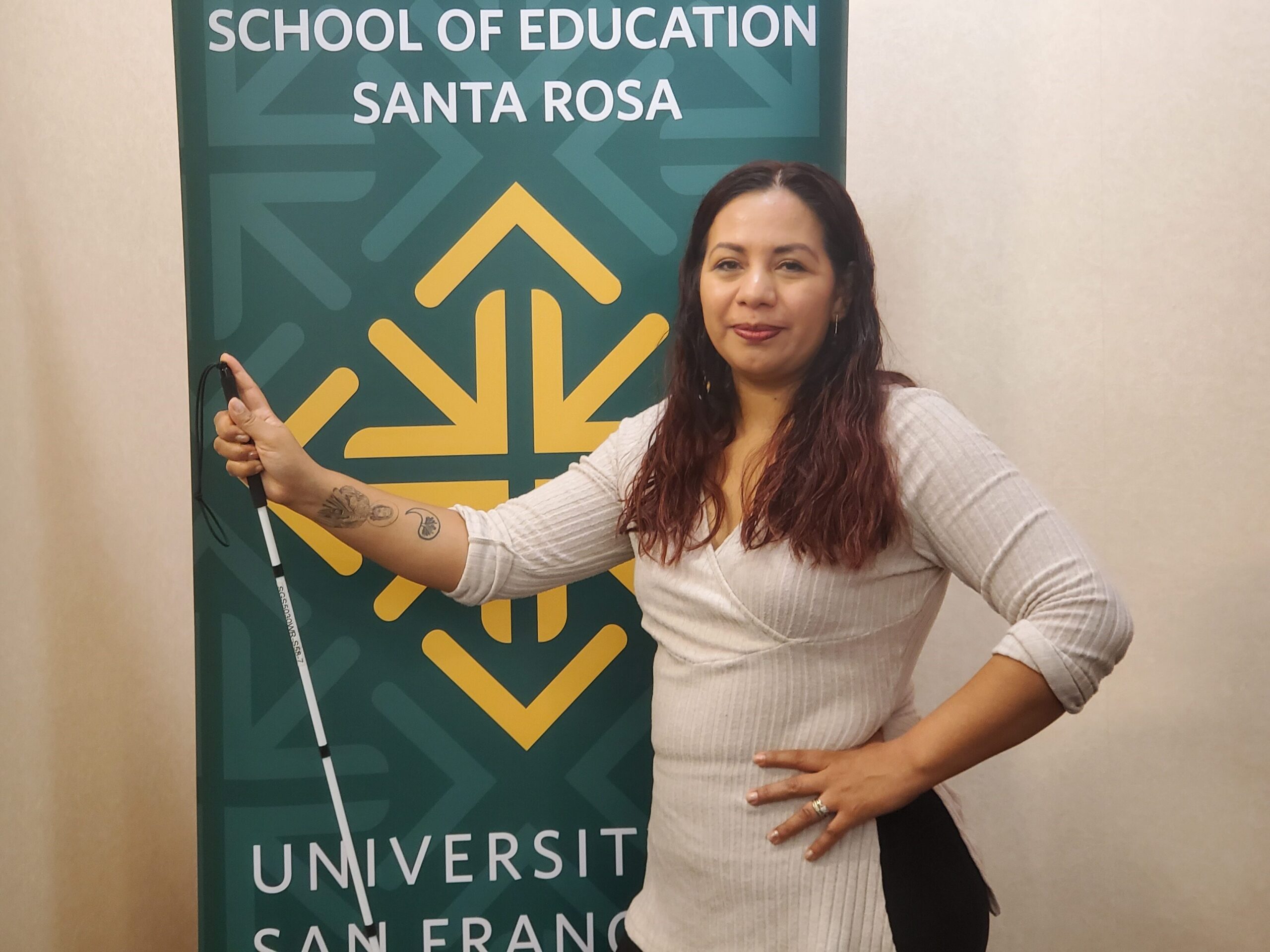
Born in Guanajuato, Mexico, Karina immigrated as a child and grew up partly in Ukiah before settling in Sonoma County. She describes northern Sonoma County as a place where diversity and inclusivity feel real.
“I like the people, the community—we’re a mix here. I feel welcome. I feel accepted,” she says. Though the cost of living can be challenging, she feels rooted in Cotati, where she feels safe and connected. “I really want to stay in this area.”
Karina’s long-term goal is to serve her community—especially Latine individuals who, like her, may encounter cultural or linguistic barriers when seeking mental-health support. She knows from experience how essential culturally sensitive care can be, particularly since the pandemic underscored the widespread need for accessible mental-health services.
Ultimately, Karina hopes to guide people with the same compassion and clarity that transformed her own life. “Therapy changed everything for me,” she says. “Now I have so many possibilities—to make a living, to help other people, to make a positive impact in my community. I am very glad and very grateful to be in this program.”
As a new Mental Health Talent Pipeline scholar, Karina brings resilience, empathy, and lived experience—qualities that will undoubtedly make her an effective therapist and a meaningful presence in the region’s growing mental-health workforce.

Related News + Stories

Invest in Our Community
Your support is vital to our collective vision of eliminating health inequities in northern Sonoma County.
Donate