

A Year in Collaboration!
3 min read. Reflecting on the impact of the Northern Sonoma County Coalition as it enters its second year.
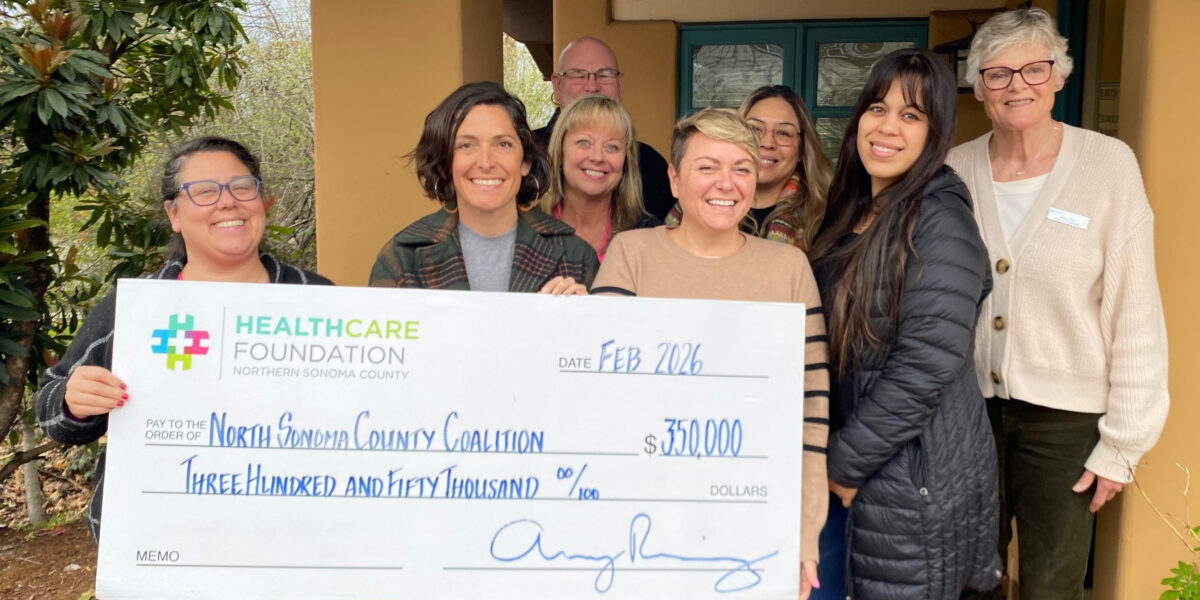
When the Healthcare Foundation launched the Northern Sonoma County Coalition in early 2025, the vision was both ambitious and wholly practical: bring together six trusted community organizations providing front-line support to our most vulnerable neighbors to help transform the region’s fragmented safety net into a more coordinated, sustainable system of care.
United by a shared commitment to implementing California’s CalAIM initiative, Alexander Valley Healthcare, Alliance Medical Center, The Botanical Bus, Corazón Healdsburg, La Familia Sana, and Reach for Home began meeting regularly—not as competitors for limited resources, but as partners working toward a common goal: ensuring that northern Sonoma County’s most vulnerable residents can access the right care, at the right time, through a system that is stronger than the sum of its parts.
Now, more than a year later, that vision is taking root. While the work of implementing CalAIM is often technical and behind the scenes, its effects are increasingly visible in stronger organizations, better referral networks, and more coordinated care. Conversations with Reach for Home and Alexander Valley Healthcare reveal that the Coalition’s greatest accomplishment extends beyond new funding or systems: it’s the trust that has developed among organizations that are now building an integrated regional system of care together.
Reach for Home

Executive Director Margaret Sluyk describes Reach for Home as “a comprehensive housing services organization. It’s basically the whole system of care when it comes to being unsheltered.”
Because collaboration has always been central to Reach for Home’s mission, joining the Coalition was a natural fit. “One of our core values is collaborating with people, places and organizations. It takes a village, and the more strategic you can be, the more efficient and effective you’ll be as an organization.”
Initially, the Coalition solved a practical problem. Reach for Home had become an approved CalAIM provider but, as Sluyk recalls, “we were stuck… we didn’t know how to bill or what any of the inner workings were to actually get paid for service.”
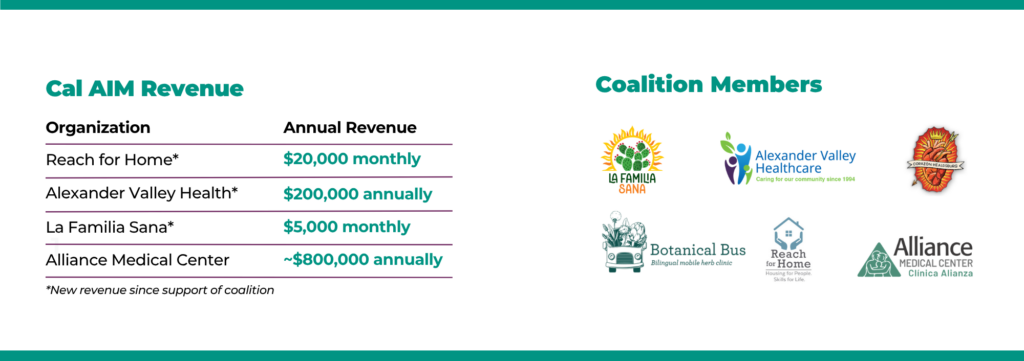
That changed quickly. “The biggest impact of joining the Coalition has been CalAIM. We’ve been able to ramp up and actually bill for services we were already providing, which is a huge deal.” Just as importantly, she says, the Coalition has strengthened relationships among providers and opened the door to new efforts such as a shared closed-loop referral system that will make it easier for organizations to coordinate care.
Over time, however, the Coalition has become about far more than billing. “It has become about how we can all work smarter and not harder, how we can leverage the already scarce funding that’s available. We feel like that was needed.” As Sluyk puts it, “It’s not that we didn’t have relationships with people before, it’s that the relationship is at a different level and more strategic.”
“Being able to continue to function and offer the programs that we do wouldn’t be possible without the Healthcare Foundation pulling people together and getting everyone up and running with CalAIM. It’s crucial right now.”
Margaret Sluyk, Reach for Home
She also credits the Healthcare Foundation with attracting funders who recognize the value of investing in collaboration, allowing organizations to build capacity while advancing “the greater good.” Although harder to measure, she believes the trust developed around the Coalition table is one of its most important outcomes.
That collaborative approach has become especially significant as public funding contracts.
“Without this CalAIM funding it would be really hard. It’s not just about getting some extra dollars in the door, it’s about covering these huge gaps in our system.”
Looking ahead, Sluyk sees the Coalition as essential to sustaining community services: “Being able to continue to function and offer the programs that we do wouldn’t be possible without the Healthcare Foundation pulling people together and getting everyone up and running with CalAIM. It’s crucial right now.”
Alexander Valley Healthcare

As one of only two federally qualified health centers in northern Sonoma County, Alexander Valley Healthcare (AVH) serves as the primary medical home for residents across Cloverdale, Geyserville, and surrounding rural communities. Christopher Swartz, Quality Manager, and Blake Manning, who manages the Enhanced Care Management (ECM) program, see the Coalition from complementary perspectives—administrative and patient-facing—but share a common view of its importance.
For Swartz, the Coalition reflects AVH’s longstanding belief that healthcare extends beyond the clinic walls. Community-based organizations, he says, are “the other arm that joins ours in embracing the patient fully.” Participating in the Coalition has exposed AVH to challenges and resources it otherwise would not see while creating opportunities to coordinate with organizations whose expertise complements clinical care.
For Manning, those relationships translate directly into better outcomes. Many Enhanced Care Management patients struggle with homelessness, behavioral health conditions, or housing instability. Through the Coalition, AVH has developed trusted relationships that make it easier to connect patients with housing, food, legal services, treatment programs, and other resources. Those connections, Manning says, “boost our ability to provide our patients with, and connect them to, the full range of care that they need.”
“It’s not that we didn’t have relationships with people before, it’s that the relationship is at a different level and more strategic.”
Margaret Sluyk, Reach for Home
The Coalition is also helping organizations build a more integrated system. Rather than independently adopting different referral platforms, members are working toward shared solutions that will improve coordination across agencies. Swartz believes this collaborative approach creates “shared resources” and “interoperability that smaller organizations usually don’t have,” strengthening existing partnerships such as AVH’s work with Cloverdale’s La Familia Sana while laying the groundwork for broader regional coordination.
Looking beyond CalAIM, Swartz believes the Coalition has given northern Sonoma County’s smaller organizations something equally valuable: a stronger collective voice. Whether planning for emergencies, participating in countywide initiatives, or ensuring rural communities are represented in regional discussions, organizations now have a forum to think and act together.
Just as importantly, the Coalition has created relationships that simply did not exist before. Reflecting on getting to know colleagues across the region, Swartz concludes with a reminder of why this work matters: “When all is said and done, we only have each other.”
Thank You to Our Generous Funders!

Barbara Grasseschi and Tony Crabb

Medtronic


Related News + Stories



Invest in Our Community
Your support is vital to our collective vision of eliminating health inequities in northern Sonoma County.
Donate