

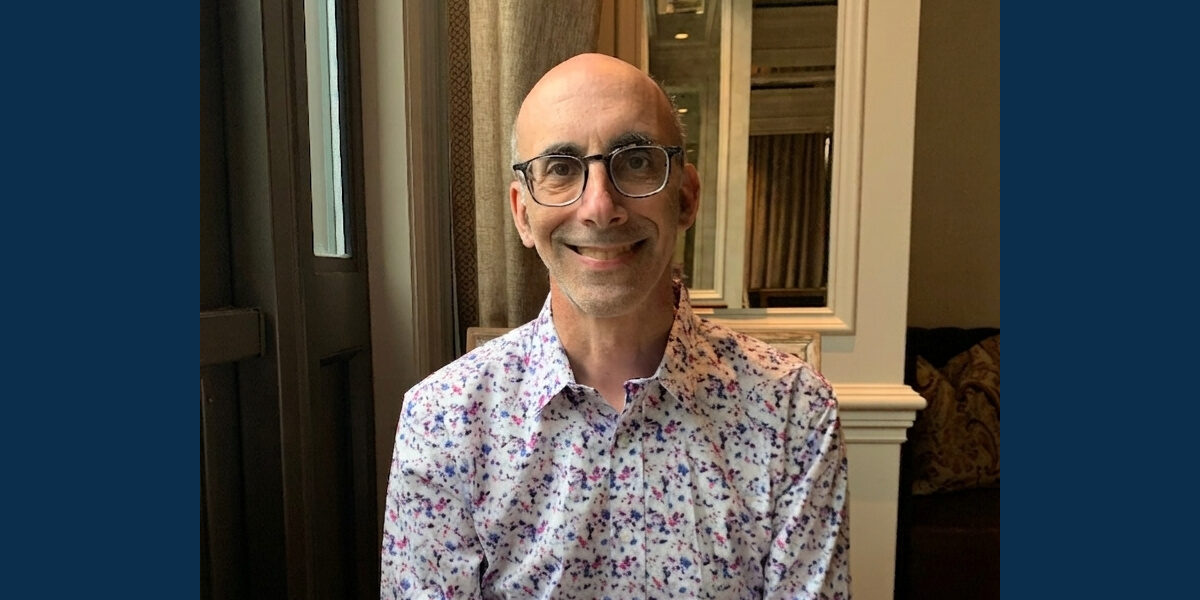
New Board Member Spotlight: Meet Jim Gibboney
4.5 min read. Dr. Jim Gibboney, our newest board member, draws on his decades of medical experience to describe what he sees as the greatest barriers to health equity--and how the Healthcare Foundation can help tear down these barriers.
The Healthcare Foundation is delighted to welcome Dr. Jim Gibboney to the Healthcare Foundation’s Board of Directors, where he has been serving since January. A recently retired physician with a long career at Kaiser Permanente, Jim brings deep clinical expertise and a longstanding commitment to advancing equitable access to healthcare. Since relocating to Sonoma County in 2017, he has become an engaged member of the community, drawn by what he describes as its strong sense of connection.
As he shares below, Jim’s perspective is grounded in decades of firsthand experience caring for patients who often struggled to access and afford the services they needed, even with health insurance. His belief that healthcare is a fundamental right for all resonates strongly with the Healthcare Foundation’s mission, and his thoughtful, collaborative approach reflects the values that guide our work across northern Sonoma County. We are deeply grateful to have his perspective, humane voice, and leadership on the Board and are pleased to share the following recent conversation.
How would you describe your background and connection to northern Sonoma County?
I’m a physician. I worked for Kaiser Permanente for many years. My husband and I moved up to Sonoma County from San Francisco in 2017. I worked at the Santa Rosa Kaiser for several years before retiring. We always loved coming up to Sonoma County to visit and to relax and rest. The idea of living in a place where we could feel rested and relaxed all the time just sounded too good to be true!
How did you learn about the Healthcare Foundation and what drew you to want to support its mission?
A friend of mine at our church, St. Paul’s, sent me a flyer for one of the events, maybe four or five years ago. That’s when I was first introduced to the Healthcare Foundation. I had always thought that, after retiring, I wanted to maintain a connection to healthcare, not as a care provider but in connection with some sort of organization devoted to, and passionate about making sure that everyone in their community has the appropriate access to healthcare and healthcare services. So I was strongly drawn to the mission of the Healthcare Foundation. I felt it really aligned with my philosophy. I believe healthcare is a right that should be available to everybody in the community.
As a physician and as a resident of the region, what do you see as the most pressing challenges in terms of advancing health equity?
Throughout my practice, in every place that I practiced, both on the East Coast and on the West Coast, I would encounter people who were struggling to make ends meet and would have to ration out the healthcare they could access, whether that meant doing without medications, postponing tests because they were too expensive, or just denying certain services or procedures because they simply couldn’t afford it. Sometimes this meant not even being able to come in for an appointment. To see so many people struggle with being able to afford healthcare services—that always struck me as fundamentally wrong and not something that our community should tolerate. I wanted to be able to do whatever I could to ease the burden of people in the community who feel like they can’t afford those basic healthcare services. Needless to say, this extends to people who have insurance. My patients generally had some type of insurance, but they still had to ration out their care.
What do you see the Healthcare Foundation doing, now or in the future, that can ameliorate that problem at the regional level?
One important thing I’ve seen the Healthcare Foundation doing is trying to tap into what the strongest needs of the community are when it comes to healthcare. For example, the need for bilingual and bicultural access to services. Another thing I would see in my practice, in addition to people not being able to afford care, is people not feeling like they could participate in their own care because of language barriers, as well as knowledge and socio-economic barriers. What I love is the Healthcare Foundation’s serious focus on engaging the community, hearing directly about its highest-priority healthcare needs, and then addressing those needs through collaboration with local community-based organizations to strengthen the delivery of the type of services the community itself is asking for.
“What I love is the Healthcare Foundation’s serious focus on engaging the community, hearing directly about its highest-priority needs, then addressing those needs through collaboration to strengthen delivery of the type of services the community itself is asking for.”
Jim Gibboney
The Community Wellness Center initiatives would be an example of that: The Healthcare Foundation spearheaded the initiative, which was then made possible in collaboration with deeply rooted community partners like Corazón Healdsburg. Another case in point is the Northern Sonoma County Coalition, which is actively coordinating among and supporting local healthcare and healthcare-related agencies.
Yes. And that speaks to another key strength of the approach: Rather than creating another organization or whole new program to provide services that other organizations are already good at, the Healthcare Foundation leverages coordination and collaboration to strengthen the services overall and bridge gaps across organizations or service areas. In this way, we’re not repeating or duplicating what other people are providing, but rather enabling them to increase the scope of what they provide and increase the range within the community of what they provide, augmenting services based on what people identify as their priorities.
How are you finding the experience of being on the Board so far?
In some ways it’s a new experience for me. I’ve been part of a vestry, or board, of a community church for several years, and I did a lot of administrative work in healthcare. So I know how executive committees and administrative committees work. But as far as a nonprofit board goes, this is the first time I’ve served on one. One of the first things I did in January, when I came onto the Board, was participate in a retreat designed to examine how the Board functions, with the intent to make it more efficient and more effective in advancing our mission. I really appreciated that introspection on the part of the Board. In the two-and-a-half months that I’ve been serving, I’ve participated in a bunch of ad hoc committees that are fine-tuning the recommendations that emerged from this self-examination. I don’t think this is something every board will try and do, and I really appreciate that thoughtfulness on the Board.
What do you most appreciate about northern Sonoma County?
What I’ve noticed is that, because it is composed of small towns and rural areas, it has a need for connection. The idea of ambulance care, for instance, has to be really thought out, because the usual large medical centers that are the basis for things like that aren’t necessarily nearby. I find this region very charming, very beautiful, and a wonderful climate, so much to enjoy. But it is also a community that realizes that, as a result of its semi-rural, pastoral landscape, it has to think carefully and thoughtfully about how it can stay connected, so that those big-city types of services are still accessible to everyone.
We were mentioning the Community Wellness Center initiative a moment ago. This month’s newsletter is focused on the theme of belonging, which is central to that effort. Is there anything you would like to say further on that theme?
Yes. It’s a theme that resonates with me especially strongly at the moment. Recently, my brother was in the hospital for an unexpected illness. He was pretty sick. He lives in the Midwest, where I grew up. I’m checking in daily with him. — I’m the doctor in the family. So everyone is always asking, “What does Jim think about this?” — So I’m connecting with him. And I saw in him what I used to see in my patients. He was, and still is, really scared. He’s looking for — maybe it’s connection — but anything that can give him reassurance, a sense that he can be taken care of.
What I want to say is that a sense of belonging, within the whole area of health and wellbeing, is the sense that someone will look out for you and make sure that you can be taken care of. Not only when things are OK, but when things are really bad; when you’re going through maybe the worst time in your life.
This recalls what you were saying at the outset, that this should be something everyone can know they have.
Yes, exactly.

Related News + Stories

Invest in Our Community
Your support is vital to our collective vision of eliminating health inequities in northern Sonoma County.
Donate